Acucups®

Health and Beauty
Therapy
The
first recorded use of negative pressure therapy is inscribed on Egyptian
pyramid walls. Scenes depict decompression - or negative pressure -
for healing purposes, by drawing air through animal horns placed on the
body.
As a result of using horns, cupping has been known as jiaofa, or the horn
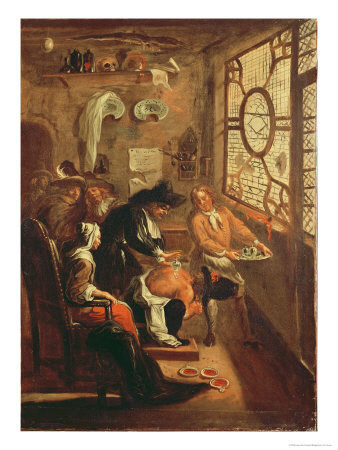
technique. Hippocrates, Father of Medicine,
described its use in Greek society.
Zhao Xuemin (1718-1905) wrote Supplement to Outline of Materia Medica,
including an entire chapter on fire jar qi (huoquan qi). In it, he
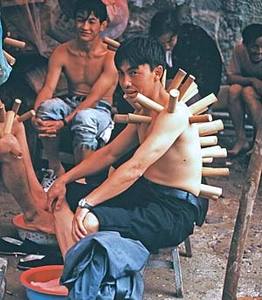
emphasized the value of this treatment, using cups made of bamboo or
pottery, in alleviating headache of wind-cold type, bi syndrome of wind
origin, dizziness, and abdominal pain.
During the 20th century, new glass cups were developed. The introduction of
glass cups helped greatly, since the pottery cups broke very easily and the
bamboo cups would deteriorate with repeated heating. Glass cups were easier
to make than the brass or iron cups that were sometimes used as sturdy
substitutes for the others.
Later on another method of suction was developed in which a valve was
constructed at the top of the jar and a small hand-operated pump is attached
so that the practitioner could suction out air without relying on fire, thus
avoiding some hazards and having greater control over the amount of suction,
though the plastic ones are not very well suited to moving along the skin
once in place, as the edges are not entirely smooth and the strength of the
cups is limited. A new idea was born where natural rubber was first used to
make
Acucups®.
The modern name for cupping is baguanfa, which means “suction cup therapy”.
In the United States, it is offered by many
massage therapists, acupuncturists and chiropractors, with various
celebrities taking advantage of this ancient technique.
What is cupping?
Cupping refers to an ancient Chinese practice in which a cup is applied to
the skin and the pressure in the cup is reduced by using change in heat or
by pressing out air, so that the skin and superficial muscle layer is drawn
into and held in the cup.
Cupping regulates the
flow of Qi and Blood. It helps draw out and eliminate factors like Wind,
Cold, Damp and Heat. Cupping also moves Qi and Blood and opens the
pores of the skin, resulting in removal of pathogens through the skin.
The essential point of cupping massage therapy is not
only to withdraw stagnant old blood, but also to remove poisonous substances
from the surface of the skin.
Cupping has been found to affect the body up to four inches into the
tissue, this results in activating the lymphatic system, clearing colon
blockages, help activating and clear the veins, arteries and capillaries.
This creates an effective treatment for many conditions such as stiff
shoulder, hardened arteries, joint rheumatism and chronic gastroenteritis
disorders as well as treatment for pain, circulatory and respiratory
diseases, skin conditions, facial paralysis, weakness of muscles, high blood
pressure and common colds
Since the cups are applied at room temperature, the indication of removing
cold from the channels is no longer applicable, at least to stationary cups.
Friction is generated with moving cups, so that there is a small but
significant amount of heat applied by that method, especially if a warming
oil is used as lubricant.
The treatment is gentle as a lubricant allows the cup to slide without
causing much bruising. Still, a certain amount of redness is expected both
from fixed position cupping, especially at the site of the cup rim, and with
movement of the cups.
Acucups® Cupping Massage and the
Contraindications
for cupping include: areas of skin that are inflamed; cases of high fever,
convulsions or cramping, or easy bleeding (i.e., pathological level of low
platelets); or the abdominal area or lower back during pregnancy. Movement
of the cups should not cross bony ridges, such as the spine.
© 2016 Premium Remedy Inc. All rights reserved.
DISCLAIMER: This website is for information only and is not intended for use as a substitute for medical advice, diagnosis or treatment of any medical condition. Any question about your health should be addressed with your health care provider.